Become someone
you respect.
A Stoic philosophy app for iOS, built on the private journal Marcus Aurelius used to govern himself. Set your intention each morning. Examine your conduct each night.
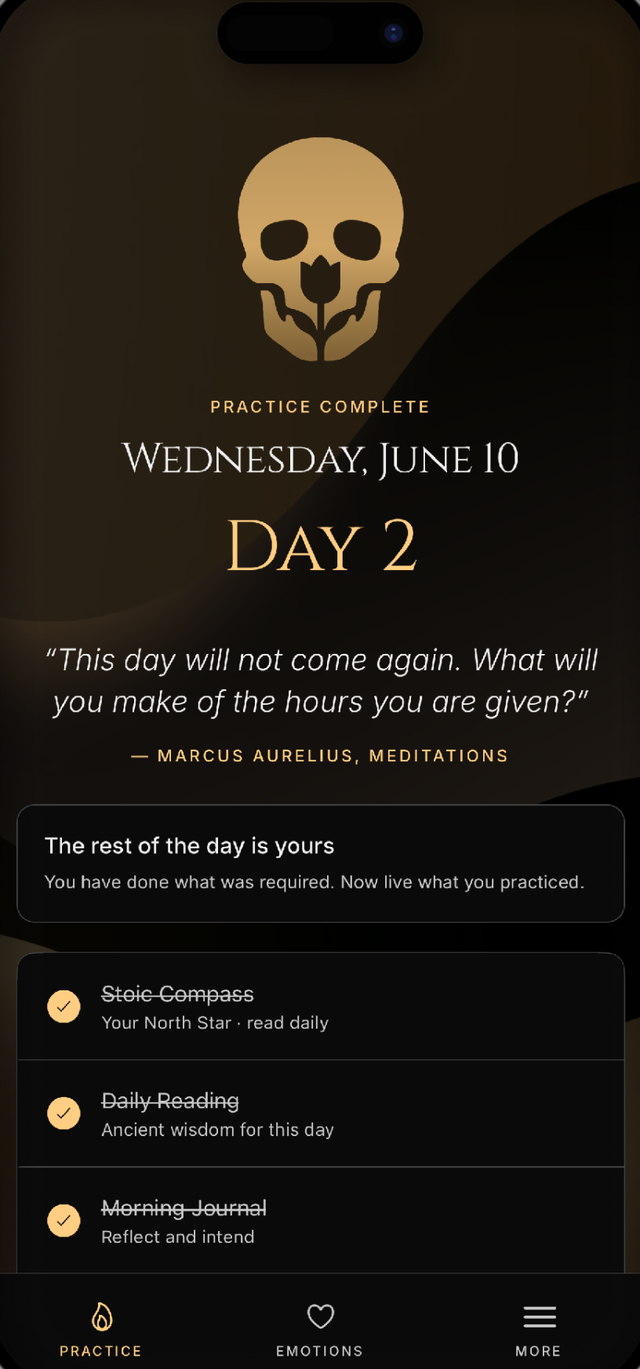
A Stoic philosophy app for iOS, built on the private journal Marcus Aurelius used to govern himself. Set your intention each morning. Examine your conduct each night.
Watch
1 min 46 sec · Sound on
The real problem
You hit the goals. Read the books. Built the routines. And still, in the quiet moments when no one is watching, the gap is there — between the person you perform and the person you actually are.
The Stoics named it two thousand years ago: the distance between who you are and who you admire. The gap hasn't changed. The apps that promised to close it just made the noise louder.
They treat you like a machine
Habit trackers optimize for the checkmark, not the character. Break a streak because life happened, and you feel shame instead of growth. The motivation was rooted in a number, not in who you are.
They reward the wrong thing
Checking off twenty small tasks feels like progress. But it's productive procrastination. The one difficult, character-building thing remains undone, and the app gave you a badge for avoiding it.
They taught you to feel good, not be good
Affirmations. Gratitude journals. "You are enough." The promise is that if you feel good enough about who you are, the gap stops hurting. The Stoics held the opposite: self-respect is not given. It is earned.
The solution
Marcus Aurelius kept a private journal. Not for publication. Not for followers. He wrote to hold himself accountable: every morning, setting his intention; every evening, examining his conduct.
It was called the daily Examen. And it worked for the most powerful man in the world, who faced pressures that make modern burnout look trivial. Not because it made him feel better. Because it made him act better.
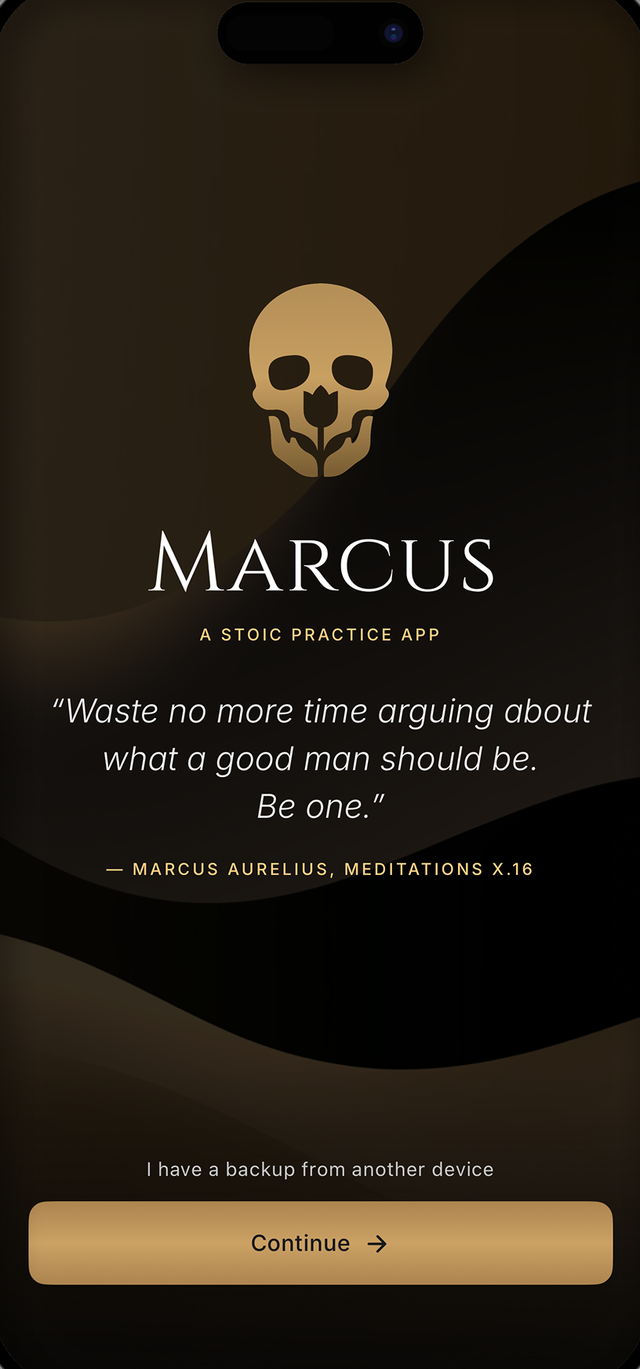
"Waste no more time arguing about what a good man should be. Be one."
— Marcus Aurelius, Meditations X.16This is what Marcus is built on: not habit tracking, not gamification, but a daily system of honest self-examination. Two thousand years without becoming irrelevant is not a coincidence. It's evidence.
"Third kid on the way, the business stretching me thin, a Donald Robertson lecture shifted something. I'd been wanting to practice Stoicism for years and kept starting and stopping because nothing was sticky enough. I built the first version in Notion because I couldn't find anything that felt authentic to me and to the philosophy. Now when something happens that would have set me off, there's enough space to see it and respond differently. That's what Marcus is. It actually works."
 Gio · Founder, Marcus
What Marcus is
Your foundation
Stoic Compass
Before the day begins, you read your compass: four personal answers to the questions that anchor everything. Why am I here? What am I working through? Who am I becoming? Which roles am I called to fulfill? It takes sixty seconds and reorients everything that follows.
Daily wisdom
Daily Reading
Every morning, a real Stoic quote chosen for you and grounded in your Compass. Marcus Aurelius, Epictetus, Seneca, and the broader Stoic tradition, accurately attributed and drawn from a library of sourced Stoic quotes. Then a space to write your own insight before the day begins.
Morning practice
Morning Journal
Five Stoic prompts including premeditatio malorum: negative visualization. Modern research confirms what the Stoics already knew: anticipating difficulty reduces anxiety and sharpens decision-making. Begin with clarity instead of noise.
Mid-day
The Mid-day Pause
The Stoics called the discipline of attention prosochē, and Epictetus gave it an entire discourse. It is sometimes called Stoic mindfulness, though the aim is not calm. It is vigilance: catching what you have already agreed to before it hardens into a judgment. One question, held for a breath, then back to your day. No timer, nothing to finish, nothing to keep score of. Off by default, because attention you choose is the point.
Evening practice
Evening Journal
The nightly Examen, the practice Seneca described and Epictetus set to three questions: what did I do well, what did I do badly, what did I leave undone. Then release what you are carrying before sleep, and name one thing that deserves your thanks. The gap between who you are and who you admire only closes when you look at it honestly.
Emotional mastery
Emotion Logger
Between stimulus and response, there is a space. This is that space. Log your triggers, examine your automatic reactions, and identify which of seven cognitive distortions is at work. The same CBT techniques validated by modern psychology — framed in the language Epictetus used two thousand years before CBT existed.
Weekly reckoning
Weekly Review
Once a week, examine the whole. A 7-day intensity trendline shows whether the storm is getting smaller. The Virtue ledger surfaces which Virtues you actually embodied — and where you fell short. If you've named your roles in the Compass, an Account prompt asks how you served each one. End with a single Commit prompt: one thing you will do differently next week. Over time, this becomes a mirror — who you're actually becoming, not who you imagine yourself to be.
What you keep
Saved Lines
The Stoics called them hypomnēmata: the passages you copied out because they were the ones you needed. Keep any line the app shows you, and a kept line returns on its own about one day in three. What you saved becomes what you are read.
Who said it
The Stoics
Twelve figures, in the order they lived, from a shipwrecked merchant teaching on a public porch to an emperor writing privately to keep himself honest. What each one taught, what it cost them, and the book worth reading first. Read them here →
A different kind of practice
Every other app
Marcus
"When you have failed, return again, and be content if the greater part of what you do is consistent with human nature."
— Marcus Aurelius, Meditations V.9The foundation
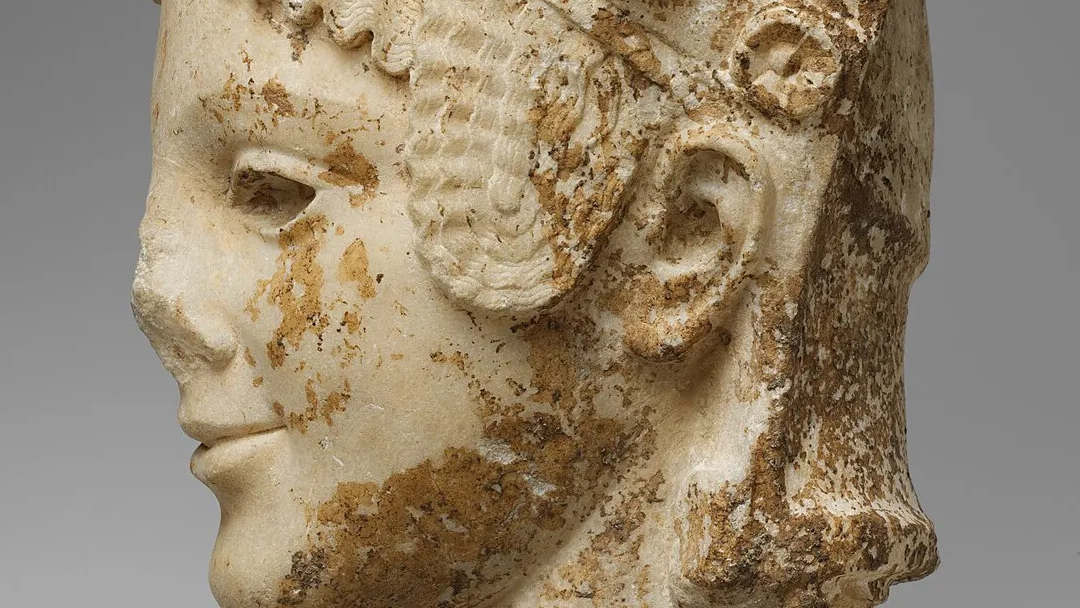
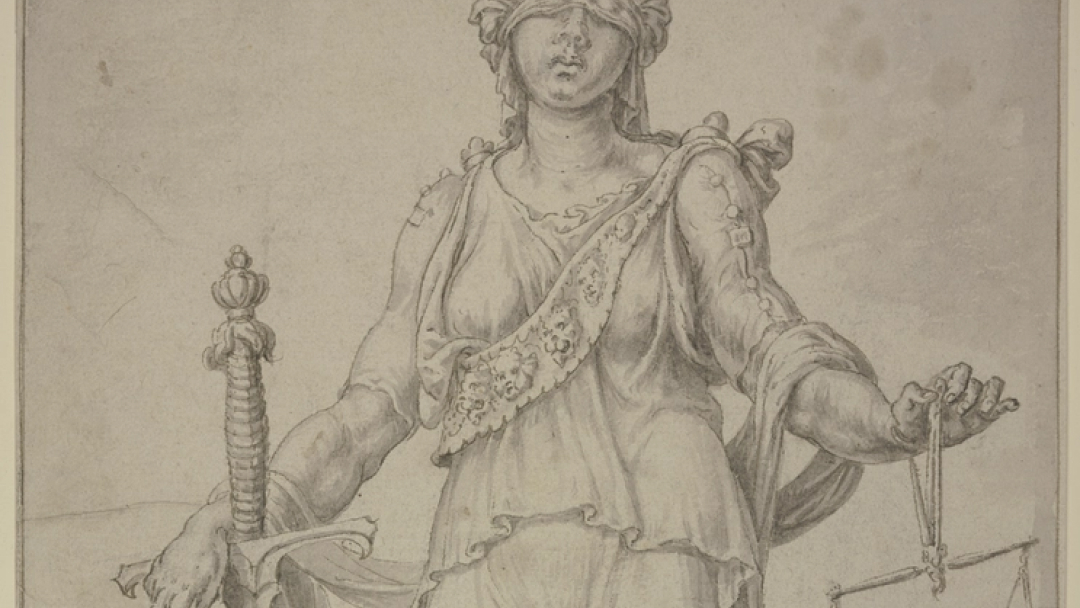
The Stoics identified four Virtues as the complete map of a good human life. Not goals. Not achievements. Ways of being. They are not separable — Wisdom without Justice is shallow, Courage without Temperance is recklessness. Marcus is built around all four, all of the time.
Wisdom
Discernment and right judgment. Seeing clearly: not as you wish things to be, but as they are.

Courage
Doing the right thing even when it is hard or costly. Not the absence of fear: its mastery.

Temperance
Neither too much nor too little of anything. Self-mastery and the disciplined middle path.
Justice
Acting rightly toward others. Community, fairness, duty: the social dimension of Virtue.
Seven guided meditations
Seven Stoic meditations, less than five minutes each. The right one surfaces at the right moment of your day: preparation in the morning, perspective at midday, accounting in the evening. Listen on the way to work, before journaling, or anytime you need to return to yourself.
Perspective
The View From Above
Preparation
Premeditatio Malorum
Accounting
The Evening Examination
Gratitude
Negative Visualization
Attention
The Present Moment
Mortality
Memento Mori
Control
The Dichotomy of Control
Pricing
Start your free trial. Pay only if the practice has changed something.
Monthly
$7.99
per month
Cancel anytime. Your data stays on your device regardless.
Download free trialAnnual
11¢
per day
Billed $39.99/year · Save 58% vs monthly. 77¢ a week for a daily practice that compounds over years.
Download free trial7-day free trial · iOS · No account required · Your journal never leaves your device
The practice
Today

Not motivational. The oldest philosophical technique for focusing a mind on what actually matters. Marcus Aurelius wrote it to himself — not as despair, but as clarification. If today were your last, would you spend it the way you're planning to?
The practice doesn't take hours. It takes honesty.
Common questions